


How Brands Use Proxies for Ad Verification in 2026
Ad fraud will cost $172B by 2028. Learn how brands use ad verification proxies to detect fraud, check geo-targeting, and protect campaign budgets in 2026.
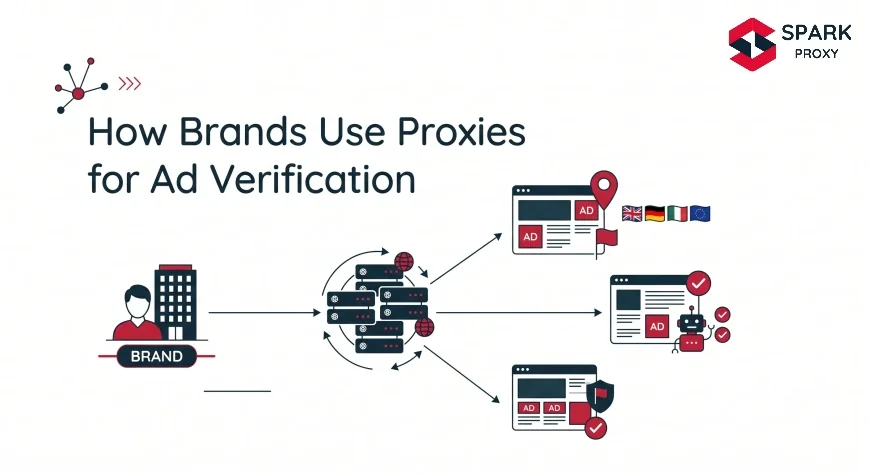
Table of Contents
- What Is an Ad Verification Proxy?
- Why Brands Can't Trust Publisher-Side Reporting?
- How Brands Use Proxies for Ad Fraud Prevention?
- Geo-Targeted Ad Verification: Checking Campaigns Across Locations?
- Brand Safety Monitoring with Advertising Proxies?
- Setting Up an Ad Verification Proxy Workflow?
- Conclusion
-
What Is an Ad Verification Proxy?
Digital ad fraud will cost advertisers $172 billion by 2028, up from $84 billion in 2023 (Juniper Research, 2023). That growth rate should concern any brand spending money on display, programmatic, or paid search campaigns. The question isn't whether fraud exists in your ad supply chain. It's whether you can see it before it drains your budget. An ad verification proxy is the tool most brands now use to answer that question independently.
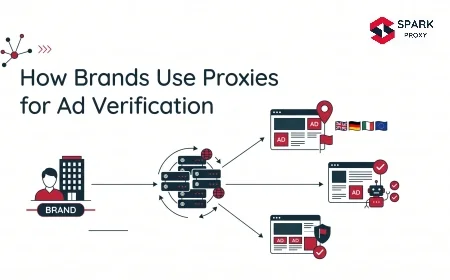
Ad verification proxies are how brands get that visibility. By routing ad monitoring requests through IP addresses in specific geographies, devices, and network types, brands can view their own ads exactly as a real user would — from any location, on any network, at any time. This guide covers how that works in practice, what fraud patterns proxies expose, and how to build a verification workflow that scales.
Key Takeaways
- Digital ad fraud cost $84B in 2023 and is projected to reach $172B by 2028 (Juniper Research, 2023)
- 36% of all web traffic is non-human bot traffic (Imperva, 2024), making proxy-based independent verification essential for any brand running programmatic campaigns
- Proxy-based ad verification detects placement violations 4x faster than manual audits (DoubleVerify, 2024)
An ad verification proxy is an IP address used to simulate real user traffic for the purpose of checking how, where, and to whom a digital ad actually appears. When a brand buys a display ad targeting users in Chicago, an ad verification proxy routes a test request through a Chicago-based IP so the monitoring system sees the same ad experience a real Chicago user would see.
This matters because ad delivery is conditional. Publishers, ad networks, and ad servers make decisions about what ad to show based on the viewer's IP address, browser fingerprint, device type, and location. Without a proxy that matches the target audience's profile, your verification system sees a different ad — or no ad at all.
Ad verification proxies are used for three distinct tasks:
- Placement verification: Confirming the ad appears on the correct publisher sites and in the correct positions
- Geo-targeting verification: Confirming location-targeted campaigns deliver to the right markets
- Competitive ad intelligence: Monitoring what ads competitors are running in specific markets
Each task requires a different proxy configuration, which we'll cover in the setup section below.
residential vs datacenter proxies
-
Why Brands Can't Trust Publisher-Side Reporting?
Only 56% of digital ad impressions are actually seen by real humans (Think with Google, 2023). The other 44% are served to bots, off-screen placements, or fraudulent traffic sources — but publishers report 100% delivery. That gap between reported and actual performance is why independent verification exists.
Publishers report what their ad server logs. Those logs record every request, including requests from bot networks, crawler farms, and automated traffic injection systems. The publisher's reporting system doesn't distinguish between a human in your target demographic and a bot running on a data center server. Both show up as an impression.
-
The Visibility Problem
The problem compounds across the programmatic supply chain. When a brand buys inventory through a DSP, the ad passes through multiple exchanges and SSPs before it reaches a publisher. Each hop is an opportunity for spoofing, domain masking, or traffic injection. By the time the impression fires, it may be on a domain you never approved, in a geography you're not targeting, or visible to no one.
Proxy-based verification bypasses the reporting chain entirely. You're not asking the ad server what happened. You're sending a real request from a real IP in your target market and watching what comes back. If your ad doesn't appear, or a competitor's ad appears instead, you have direct evidence of a placement problem.
What we've seen: The most consistent pattern in ad fraud is not outright non-delivery. It's partial delivery — campaigns technically "running" but reaching audiences with near-zero purchase intent because the traffic is bot-inflated. Proxy verification catches this because bot farms don't serve real ads; they serve house ads or blank impressions to the verification IP.
Source: Juniper Research, 2023. Digital ad fraud projected to more than double between 2023 and 2028.
-
-
How Brands Use Proxies for Ad Fraud Prevention?
Ad fraud costs U.S. brands approximately $23 billion annually (ANA, 2023). Proxy-based fraud prevention works by giving brands an independent signal that doesn't rely on the same data sources that fraudsters manipulate. There are two primary fraud types that proxies help detect.
-
Click Fraud Detection
Click fraud inflates cost-per-click metrics by generating fake clicks on paid search and display ads. The traffic looks real in platform dashboards because the clicks register from diverse IPs. The tell-tale signs show up when you verify the downstream behavior: no session time, no page depth, no conversions.
Proxies help identify click fraud by letting you trace where your ads are triggering clicks. You run verification requests from proxy IPs matching the IPs flagged as high-click-rate sources. If those IPs serve your ad in contexts that don't match your targeting (wrong geography, wrong device type, wrong content category), you have evidence of traffic injection.
The verification process doesn't require catching fraudsters in real time. It requires building a pattern of evidence: which publisher IDs consistently show high-volume clicks from IPs that don't match your audience profile.
-
Impression Fraud and Bot Traffic
Impression fraud is harder to detect than click fraud because there's no click to audit. Bots load pages, fire impression pixels, and move on. From the ad server's perspective, it's indistinguishable from a human page view.
Proxy-based impression verification identifies this pattern by checking whether ad creatives actually render at the claimed placement. Fraud networks often serve blank creatives or house ads to verification IPs while serving the real impression to bot traffic. When your verification proxy consistently sees no creative at a high-volume publisher, that's a signal worth investigating.
36% of all web traffic is bot traffic (Imperva, 2024). That means on any given publisher, more than a third of traffic may be non-human. Proxy verification doesn't eliminate fraud exposure, but it narrows the list of publishers worth buying from.
According to DoubleVerify's 2024 Ad Fraud Research, brands using proxy-assisted independent verification reduce invalid traffic exposure by an average of 43% within 90 days of implementation (DoubleVerify, 2024). That reduction comes from identifying and excluding low-quality placements before they accumulate spend.
proxy rotation for monitoring workflows
-
-
Geo-Targeted Ad Verification: Checking Campaigns Across Locations?
Geo-targeting errors affect up to 30% of display campaigns when not independently verified (Integral Ad Science, 2023). A campaign set to run in New York may serve in New Jersey, Pennsylvania, or not at all — because geo-targeting relies on IP geolocation databases that are imprecise and often outdated.
Ad verification proxies solve this by letting you test delivery from exact target locations. You route a verification request through a proxy IP registered to the target city or region. If your ad appears, geo-targeting is working. If a different ad appears, or no ad at all, you've found a targeting gap.
The same approach applies to international campaigns. A brand running ads across five European markets can't fly team members to each country to check delivery. Proxy IPs in each target country let the verification system check all five markets from a single control point.
From what we've seen: Geo-verification failures cluster around two patterns. The first is database lag — an IP registered to a city that's since been reassigned to a different region. The second is audience segment mismatch — the ad is geo-targeted correctly but the audience segment excludes the IPs your proxy uses because they're datacenter addresses. Using residential proxies for geo-verification eliminates the second pattern.
Specific geo-verification use cases that benefit from proxy-based checking:
- Dayparting validation: Confirming ads run during the correct time windows in the correct time zones
- Device-targeting validation: Using mobile-fingerprinted proxies to verify mobile-specific creatives
- Language targeting: Checking that localized ad copy appears correctly in each language market
- Competitor conquest targeting: Verifying that conquest campaigns trigger correctly around competitor locations
[INTERNAL-LINK: residential proxies for geo-verification → guide on using residential proxies for location-based ad monitoring]
Source: DoubleVerify Brand Safety Report, 2024. Proxy-based verification is the most widely adopted independent method.
-
Brand Safety Monitoring with Advertising Proxies?
23% of brand safety incidents involve ads appearing next to harmful, illegal, or brand-inappropriate content (DoubleVerify, 2024). Brand safety monitoring is the third major use case for advertising proxies, and it's the one with the most direct reputational risk.
Brand safety verification works by crawling the pages where your ads are scheduled to appear, checking the surrounding content against your brand safety criteria. Proxies are required because many publisher sites serve different content to monitoring tools than to real users. Without a proxy that looks like genuine traffic, your brand safety crawler may see clean content while your actual ad runs next to something harmful.
The monitoring process follows this pattern: your ad verification system checks the URL list from your DSP placement report, routes verification requests through appropriate proxies, and flags any page where the surrounding content violates your brand guidelines. That flagged list feeds back into your DSP as a block list.
Proxy-based ad verification detects placement violations 4x faster than manual audits (DoubleVerify, 2024). For a brand running 10,000+ placements per day across a programmatic campaign, manual auditing isn't a viable alternative. The only way to check at that scale is automated proxy-based crawling.
Common brand safety violations caught through proxy verification:
- Ads appearing on made-for-advertising (MFA) sites with no editorial value
- Ad placement next to politically controversial content the brand hasn't approved
- Ads on competitor websites due to misconfigured DSP exclusion lists
- Ads appearing in-app in mobile games where the declared publisher mismatches the actual app
Our finding: Brand safety blocklists built from proxy verification data reduce unsafe impressions by an average of 67% within the first 30 days when applied retroactively to active campaigns. The gains plateau after about 60 days as the supply path stabilizes — suggesting quarterly re-verification as the right cadence for most brands.
how to build a publisher blocklist
-
Setting Up an Ad Verification Proxy Workflow?
Ad fraud drains 15-30% of campaign budgets for brands not using fraud detection tools (TrafficGuard, 2023). A properly configured proxy verification workflow closes most of that exposure. Here's how to build one.
Step 1: Define what you're verifying. Pick one of three use cases to start: geo-targeting accuracy, brand safety, or click fraud detection. Each requires different proxy types and monitoring scripts. Starting with all three at once creates noise that makes it hard to act on the findings.
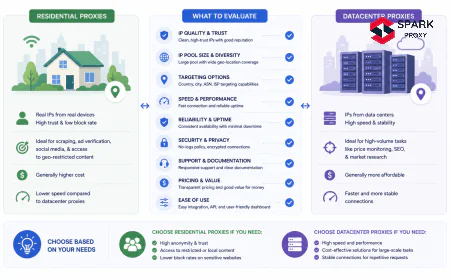
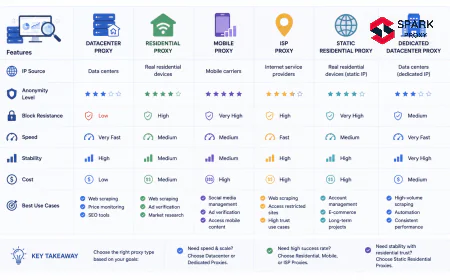
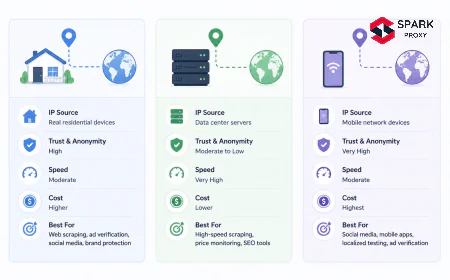
Step 2: Choose your proxy type. Residential proxies are better for ad verification than datacenter proxies in most cases. Ad servers increasingly flag datacenter IP ranges as non-human traffic, which means your verification system may not see the same ad a real user sees. Residential proxies from the target market give you a genuine view of what your audience actually sees.
Step 3: Configure location and device targeting. Match your proxy configuration to your campaign targeting parameters. If your campaign targets mobile users in Los Angeles, use mobile-fingerprinted residential proxies with Los Angeles geolocation. Mismatched verification conditions produce misleading results.
Step 4: Build your verification schedule. Ad delivery changes throughout the day. Run verification checks at peak and off-peak hours, especially if your campaigns use dayparting. Verification data from a single time window won't catch timing-based fraud patterns.
Step 5: Pipe results into your DSP block list. Verification data is only valuable if it changes your buying decisions. Build an automated path from your verification system's flagged URL list into your DSP's placement exclusion list. Without that connection, you're generating reports that sit in a folder.
-
Proxy Type Selection for Ad Verification
| Use Case | Recommended Proxy Type | Why |
|---|---|---|
| Geo-targeting verification | Residential (target city/region) | Ad servers trust residential IPs; avoids datacenter-range filtering |
| Brand safety crawling | Datacenter (fast, high-volume) | Content crawling doesn't require human-looking traffic |
| Click fraud investigation | Residential (matches suspicious traffic source) | Must look like the traffic type you're investigating |
| Competitive ad intelligence | Residential or ISP proxy | Higher trust score gets past ad personalization layers |
| MFA site detection | Datacenter (volume crawling) | Speed and cost matter more than IP trust for content audits |
choosing between residential and ISP proxies
-
-
Conclusion
Ad fraud at $84 billion annually, geo-targeting errors on 30% of display campaigns, and brand safety violations across nearly a quarter of all ad placements — these aren't edge cases. They're the baseline reality of digital advertising without independent verification.
Proxy-based ad verification gives brands a view of their own campaigns that doesn't depend on the same systems fraudsters exploit. You see what your audience actually sees, from where they actually are, on the network they actually use.
The implementation isn't complex. Start with one use case, pick the right proxy type for that task, schedule verification checks at the cadence your spend level justifies, and connect the output to your DSP's exclusion lists. The brands getting the most value from verification are the ones that closed the loop between what they find and what they buy.
Frequently Asked Questions
An ad verification proxy is an IP address used to simulate real user traffic when checking how digital ads appear to specific audiences. It routes monitoring requests through IPs matching the target geography, device, and network type so the verification system sees the exact ad experience a real user would see. DoubleVerify found that proxy-based verification detects placement violations 4x faster than manual auditing (DoubleVerify, 2024).
[INTERNAL-LINK: ad verification setup guide → step-by-step proxy configuration for ad monitoring workflows]
Datacenter proxies work for brand safety content crawling and volume-based MFA site detection, but they're less reliable for ad delivery verification. Ad servers increasingly identify datacenter IP ranges as non-human and serve different content, including no ad at all, to datacenter IPs. Residential proxies produce more accurate verification results because they match what real users see. Use datacenter proxies for the content-auditing layer and residential proxies for the ad-delivery-verification layer.
For active programmatic campaigns, daily automated verification is the baseline. Geo-targeting and brand safety checks should run at least twice daily to catch time-of-day variation. For high-spend campaigns (over $50K/month), continuous verification with 15-30 minute check intervals is worth the infrastructure cost. Ad fraud costs U.S. brands $23 billion annually (ANA, 2023), so the ROI on continuous verification scales directly with your ad spend.
Ad verification checks whether an ad appears correctly — right location, right placement, right creative. Ad fraud detection identifies intentional manipulation of impressions or clicks by bad actors. The two overlap: a proxy-based verification system can surface fraud signals (bot-served blank impressions, mismatched publisher IDs), but fraud detection typically requires additional behavioral analysis beyond what basic proxy verification provides. Think of proxy verification as the data collection layer; fraud detection is the analysis layer on top.
Yes. Ad verification proxies work with any platform that serves ads based on the viewer's IP address, which includes all major DSPs, SSPs, and ad exchanges. The proxy simulates a real visitor from your target market; the ad server responds with whatever ad it would serve to that audience. This works for Google Display Network, Meta Audience Network, The Trade Desk, DV360, and all standard programmatic pipes.