


What Is a Shared Datacenter Proxy? Cost and Risks
A shared datacenter proxy splits one pool of datacenter IPs across many users. Learn how sharing works, the bad-neighbor risk, and when it's good enough.
Everything tagged proxy types.

A shared datacenter proxy splits one pool of datacenter IPs across many users. Learn how sharing works, the bad-neighbor risk, and when it's good enough.

A backconnect proxy gives you one gateway endpoint that rotates your exit IP on every request. Learn how it works, its limits, and when to use one.

A distorting proxy hides your real IP by substituting a false one in request headers. Learn how it compares to elite proxies and when to use each level.

A SOCKS proxy routes any TCP or UDP traffic at the session layer, not just HTTP. Learn how SOCKS4, SOCKS4a, and SOCKS5 differ, and when to use each.

An HTTP tunnel uses the CONNECT method to relay any TCP traffic through an HTTP proxy. Learn how it works, when to use it, and its security implications.

Geo-targeting in proxies means routing requests through IPs in a specific country, city, or ASN. Learn how it works, how accurate it is, and when you need it.

A transparent proxy intercepts your traffic with zero setup and leaks your real IP. See how it works, how to detect one, and why it fails for scraping.

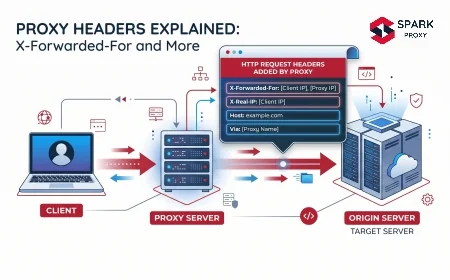
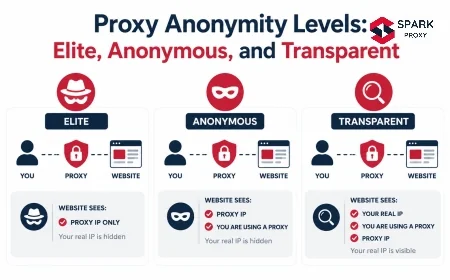
Proxy anonymity has three levels based on which headers reach the destination. Learn what each level reveals, how detection works, and which level to choosee.

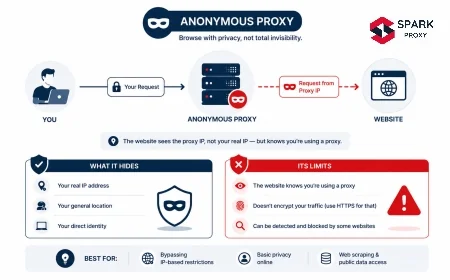
An anonymous proxy hides your IP address from target servers but does not make you invisible. Learn the three proxy anonymity levels, what anonymous proxies can and cannot conceal, and which tier your use case actually requires.

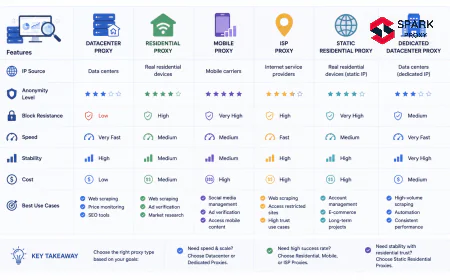
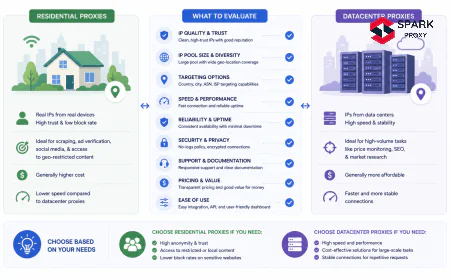
Datacenter proxies cost $0.50/GB but hit 30, 60% block rates. Residential reaches 91% success. See which proxy type wins each data collection use case.

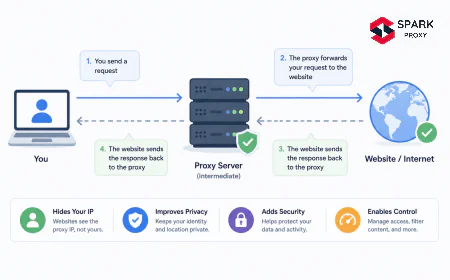
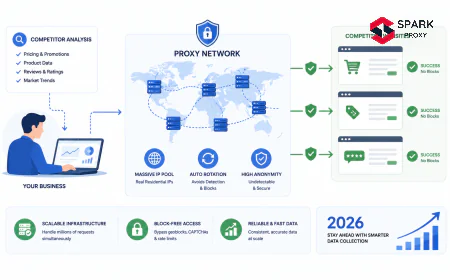
Proxy servers route traffic through an intermediary IP, cutting detection rates below 5% for residential types. Covers types, protocols, and key use cases.

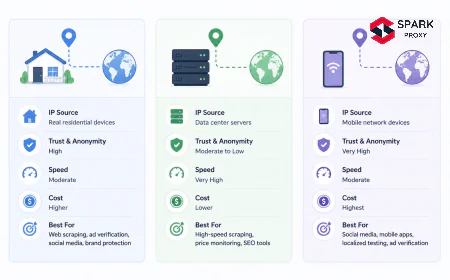
Datacenter proxies block at 30-60% on protected sites; residential hits 85-99%, mobile 97%. Compare all 3 proxy types with 2026 cost and use case guides.

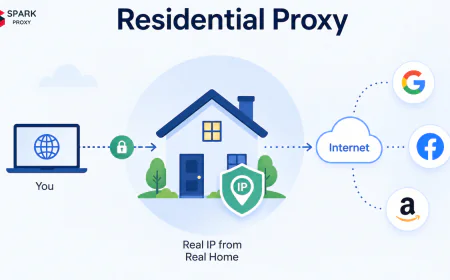
Residential proxies use real ISP IPs to achieve 3, 5% block rates vs 40% for datacenter proxies. Covers 5 types, rotation mechanics, and 6 key enterprise use cases.